

They wanted to lead on
ESG. They just didn't know
where to start.
Concentric Solutions saw ESG credentials as a competitive advantage, both for winning clients and for expanding their own service offering. But without a baseline, without data, and without a roadmap, "starting" felt impossible.
Company
Concentric Solutions
Year
2024 · Contract
My Role
Associate ESG Advisor
Focus Areas
GHG · SASB · Reporting · Policy Review
Case Study · Concentric Solutions
The Challenge
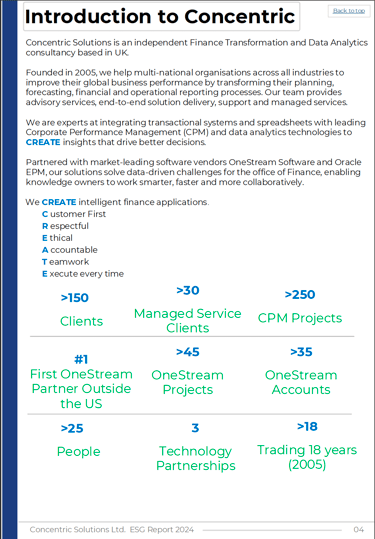
Concentric Solutions wanted to develop their ESG credentials, partly to demonstrate their environmental and brand values to prospective clients, partly to explore offering ESG reporting as a service themselves. An ambitious and aspiration goal.
No Baseline
They had no established carbon footprint, no emissions data templates, and no understanding of what Scope 1, 2, or 3 even meant in the context of their specific operations.
❓
📂
🧩
Reporting Gaps
Existing CSR and ESG-adjacent policies were strong, but their publicly available reported data was weak. Without a strong foundation, any reporting effort would have nowhere to anchor to.
No Framework Alignment
There was no clear sense of which reporting framework to follow, how to structure a sustainability report, or how to make their data comparable to industry peers.
Perhaps most importantly, the challenge wasn't just about producing a report, it was about ensuring the knowledge didn't leave with the consultant. Concentric needed to understand their own data well enough to maintain it independently in future years.
This starting point is common. It's actually the easiest place to get right.
Starting from zero has an advantage: no bad habits to unlearn, no flawed methodologies to unpick. Working with ESG projects at this stage is knowing that the key to a successful first engagement isn't producing the most impressive report, it's building the systems and knowledge that make year two take half the time.
I led the Concentric ESG project: conducting the health check, running stakeholder interviews, building GHG templates, aligning to SASB standards, and producing their first sustainability report. Every step was structured to leave them more capable than I found them.
Where I came in
From blank page to first sustainability report in four structured stages.
ESG Health Check & Business Understanding
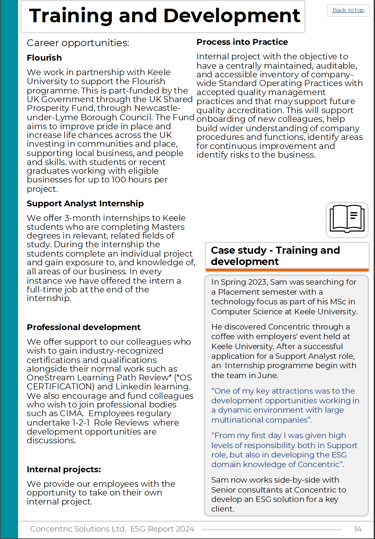
I began with a structured self-evaluation across the business, mapping what ESG metrics were already being met (often without the team realising it), identifying what was genuinely missing, and creating a clear baseline from which targets could be set. I also reviewed existing CSR and ESG-adjacent policies to identify gaps in coverage.
GHG Data Collection & Carbon Footprint
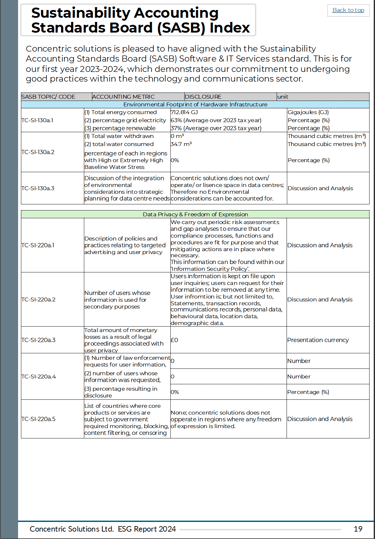
I built bespoke GHG reporting templates aligned to the GHG Protocol, covering Scope 1, 2, and 3 emissions. These weren't one-time tools, they were designed with written methodologies on each section so the data collection process could be repeated by the team independently in subsequent years.
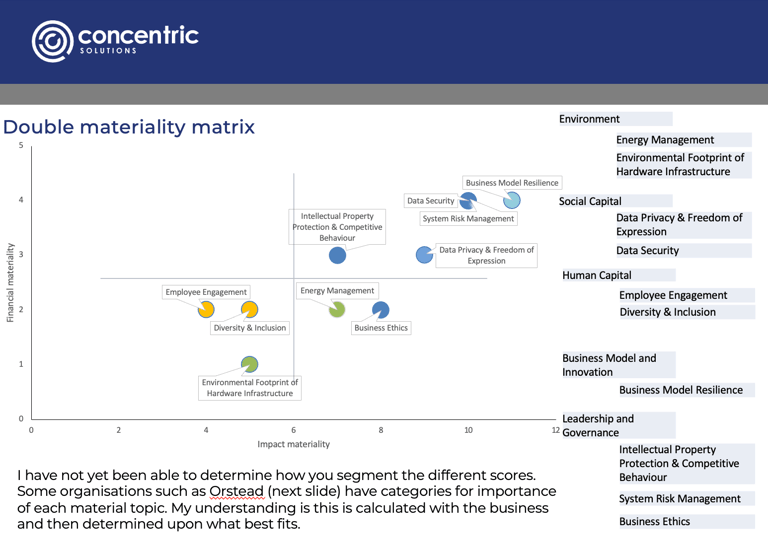
Framework Alignment & Materiality Matrix
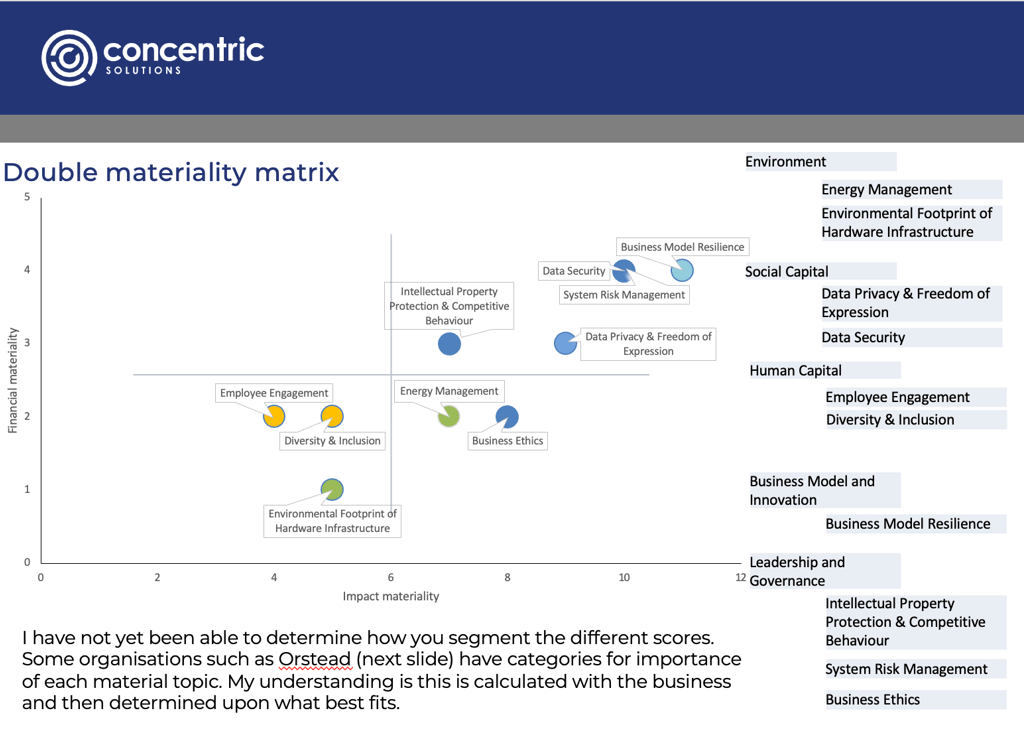
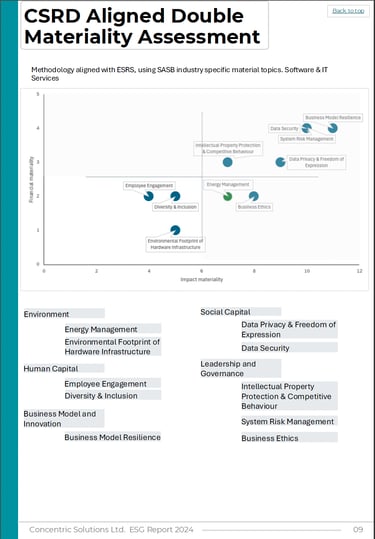
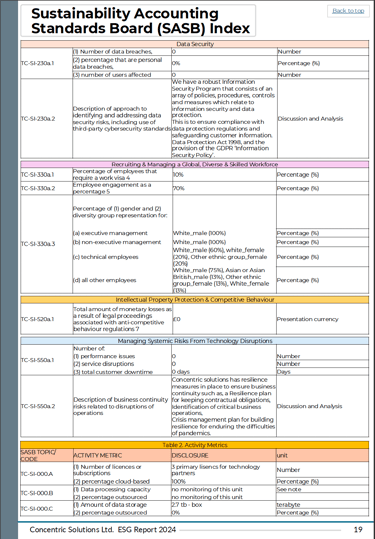
Using SASB Industry Standards and the CSRD/ESRS double materiality framework, I developed a materiality matrix that identified which ESG topics were most financially material and most impactful for Concentric's specific sector, giving their reporting genuine strategic grounding, not just a checklist exercise.
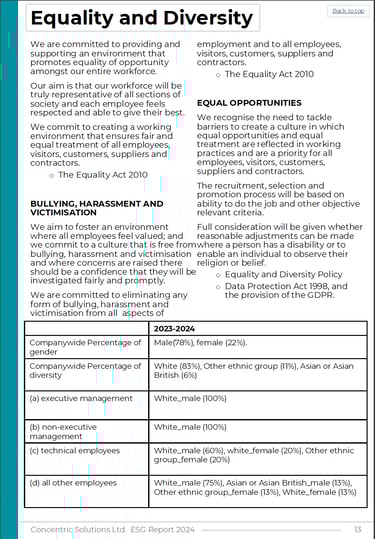
Non-Financial Sustainability Report
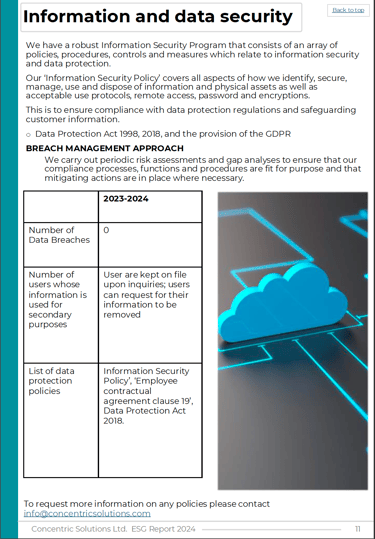
I built a full sustainability report framework based on industry standards and relevant comparator reports, then completed the first version incorporating all stakeholder interviews, carbon data, and policy outputs. A concluding "ESG Lessons Learnt" session ensured the key team members understood the what and the why, not just the what.
The Approach
1
2
3
4
Not sure where to begin with ESG?
That's exactly where to start.
The most common first question is "where do we even start?" and it's the right question. A single discovery enquiry usually answers it. No commitment, no jargon, no overwhelm.
What companies lose when ESG stays on the to-do list.
What's at stake
Competitive disadvantage
Clients, investors, and partners increasingly compare ESG credentials before making decisions. Companies without them lose ground to those who invested earlier.
🏆
💸
🔄
📅
Hidden cost leakage
Without reviewing utilities and supplier invoices through an ESG lens, businesses routinely overpay for services or miss opportunities to reduce consumption, costs that compound year after year.
Consultant dependency
Engaging support that doesn't transfer knowledge leaves you starting from scratch every year. The right engagement builds internal capability, not ongoing reliance.
Regulatory requirements around non-financial reporting are tightening. Businesses without established data collection processes will face a much steeper climb when compliance becomes mandatory.
Reporting readiness gaps
A real baseline. A report worth sharing.
A team that knows their own numbers.
The Outcome
First sustainability report
A complete, framework-aligned non-financial report that genuinely represented the company — not a generic template with their name on it.
✦
✦
✦
✦
Repeatable data systems
GHG templates with written methodologies meant the team could run year two's data collection independently — reducing both time and external cost.
Internal ESG literacy
A structured "Lessons Learnt" session ensured the relevant team members understood the data behind the report — so knowledge stayed in the business.
The review process identified areas where Concentric was being overcharged on utilities and services — practical savings uncovered through a sustainability lens.
Operational improvements
At the end of the engagement, Concentric Solutions had their first complete sustainability report, aligned to SASB and the CSRD double materiality framework, along with GHG data templates and methodologies that allowed them to run the same process internally the following year. The project also surfaced practical operational improvements that had nothing to do with ESG reporting, but everything to do with running a more efficient business.
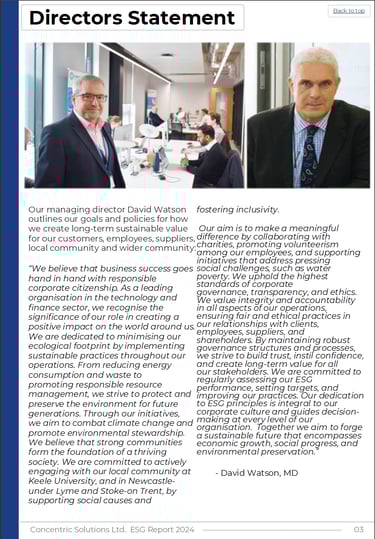
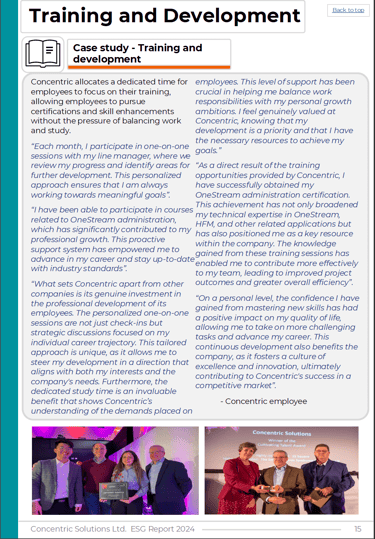
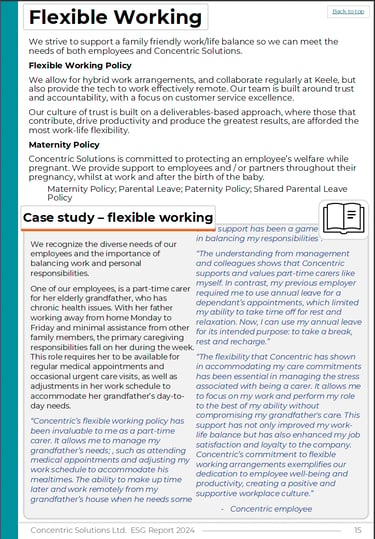
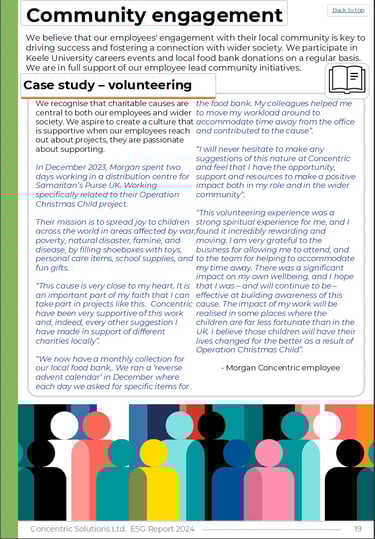
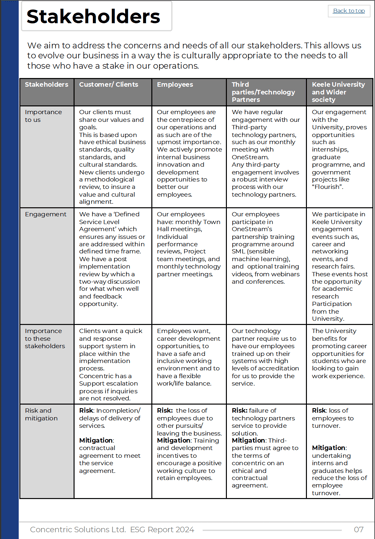
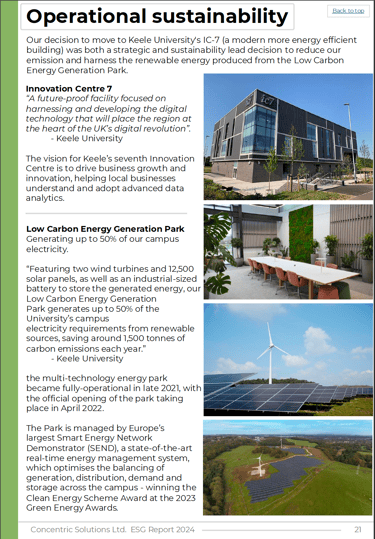
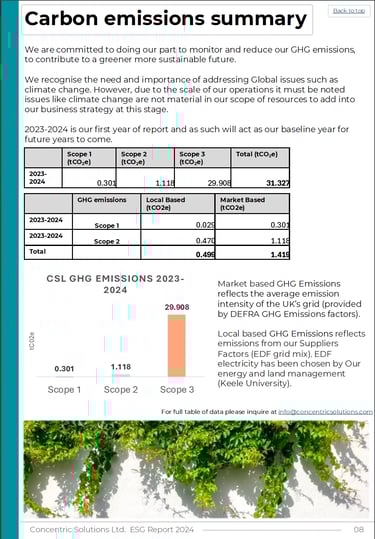
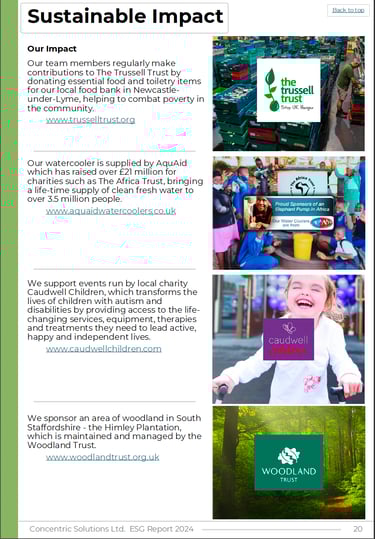
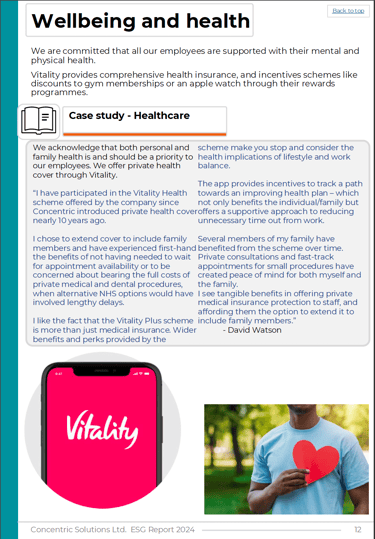


Jack has been a pleasure to work with. His contribution to the team on recent ESG projects has been exceptional. He is clearly passionate about his subject and brings a depth of understanding that has significantly advanced our internal initiatives around ESG Reporting. His approach has been practical and collaborative, with an attention to detail and proactivity that has meant we could rely on him to drive workstreams of activity independently, and have confidence in the result. The team at Concentric look forward to working with him further, and wholeheartedly endorse his professional approach.
- David Watson
Contact:
Email:


JackMurtonESG
Building the ESG foundations your future self will thank you for.